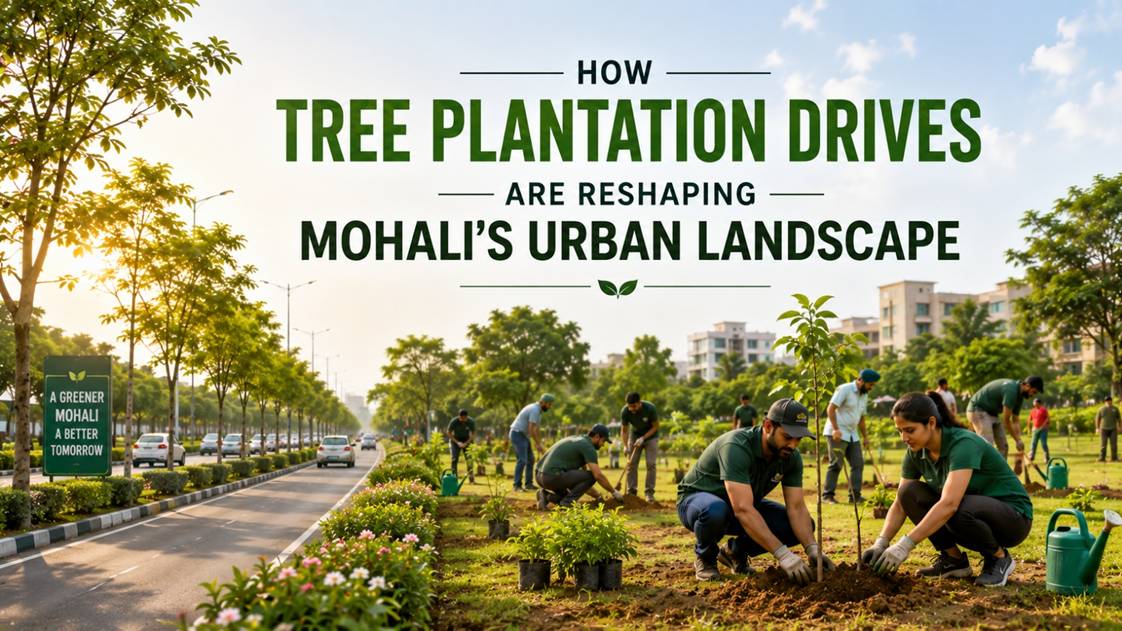
As cities grow, the challenge of balancing development with environmental sustainability becomes increasingly important. New roads, residential sectors, commercial districts and public infrastructure are essential for urban progress, but so too is the need to preserve and expand green spaces. In Mohali, tree plantation drives have emerged as one of the most visible efforts to ensure that urban growth is accompanied by environmental stewardship.
Over the past several years, thousands of saplings have been planted across parks, green belts, institutional campuses, road corridors and emerging residential areas. These plantation efforts are gradually reshaping Mohali’s urban landscape, helping create a city that is not only larger and more modern, but also greener and healthier for future generations.
Trees play a unique role in urban environments. Unlike many infrastructure projects whose benefits are immediately visible, the impact of tree plantation unfolds over time. A sapling planted today may take years to reach maturity, but once established, it can provide shade, improve air quality, reduce temperatures and contribute to the overall well-being of the community for decades. In this sense, every plantation drive represents a long-term investment in the city’s future.
One of the most noticeable outcomes of these efforts can be seen along Mohali’s roads and green corridors. Many major routes that once featured limited vegetation are now lined with rows of trees, flowering plants and landscaped stretches. These green corridors enhance the city’s visual appeal while also helping to absorb pollutants and reduce dust levels generated by increasing traffic and construction activity.
Tree plantation campaigns have also contributed to strengthening Mohali’s parks and public spaces. Young trees planted in neighbourhood parks eventually become the shade-giving canopies that make outdoor spaces more comfortable and inviting. As these trees mature, they help transform ordinary open areas into vibrant community spaces where residents can walk, exercise and spend time with family and friends.
The environmental benefits extend well beyond aesthetics. Trees act as natural air filters, absorbing carbon dioxide and releasing oxygen into the atmosphere. They help moderate temperatures by reducing the urban heat effect, a phenomenon that becomes increasingly significant as cities expand. During Punjab’s hot summer months, tree-lined roads and shaded parks can make a noticeable difference in the comfort of public spaces.
Biodiversity is another important outcome of increasing tree cover. Urban trees provide habitats for birds, butterflies and other forms of wildlife that contribute to a healthier ecosystem. Even within a rapidly growing city, green spaces can help maintain ecological balance and strengthen the connection between residents and nature.
Educational institutions, government departments, environmental organizations and local communities have all played a role in supporting plantation initiatives. Annual campaigns held during occasions such as Van Mahotsav and World Environment Day have encouraged public participation and increased awareness about the importance of environmental conservation. These efforts help ensure that tree plantation is not viewed as a one-time activity but as an ongoing civic responsibility.
The success of plantation drives, however, depends not only on planting trees but also on maintaining them. Watering, protection and long-term care are essential to ensure that saplings survive and flourish. Across Mohali, growing attention is being given to the maintenance of green spaces, recognizing that sustainable environmental improvement requires consistent effort over many years.
As newer developments continue to emerge in areas such as Aerocity, IT City and other expanding sectors, the importance of urban forestry will only increase. Trees help create a balance between built infrastructure and natural environments, ensuring that growth does not come at the cost of environmental quality. Integrating plantation efforts into long-term urban planning can help create more resilient and sustainable communities.
Today, the benefits of these plantation drives are becoming increasingly visible across Mohali. Roads appear greener, parks feel more welcoming and public spaces offer greater comfort and environmental value. While the transformation may be gradual, its impact is profound. Every tree planted contributes to a larger vision of a cleaner, healthier and more liveable city.
As Mohali continues to evolve, tree plantation will remain one of the simplest yet most powerful tools for shaping its future. The saplings planted today are helping create the green canopy of tomorrow, ensuring that urban growth and environmental sustainability continue to move forward together.

Mohali Dialogues
I work as a journalist and digital content writer for Mohali Dialogues, specializing in local news, civic issues, government updates, politics, education, business, and technology. I am committed to creating factual, well-researched, and engaging stories that help readers stay informed about the latest developments in Mohali, Punjab, and beyond.
Join the conversation
Keep it useful, respectful and relevant to the story.