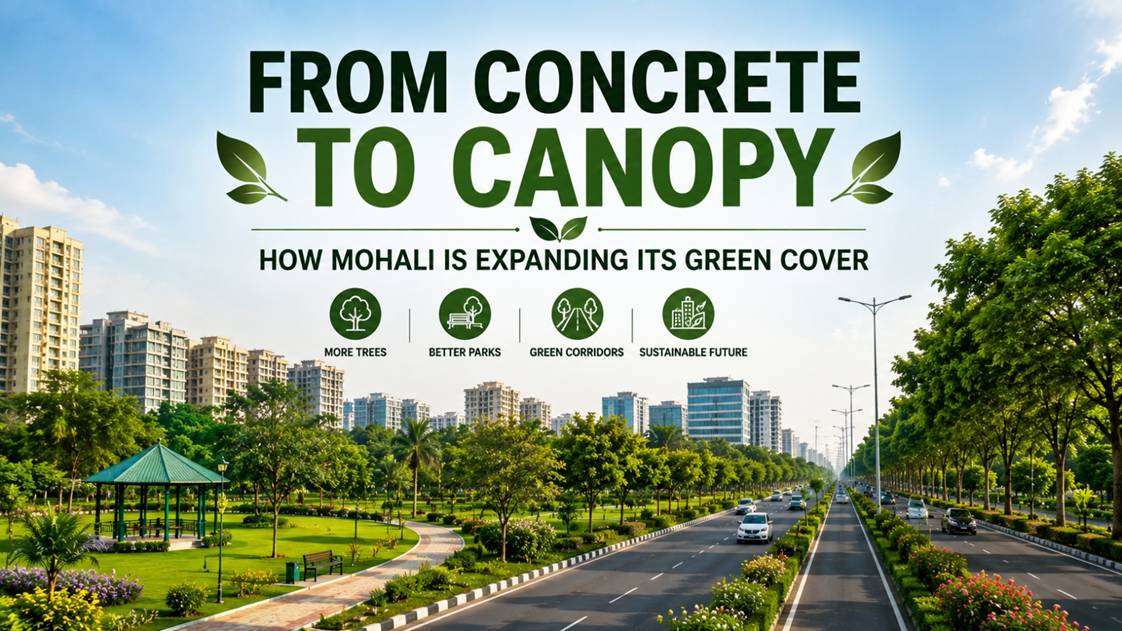
Over the past two decades, Mohali has emerged as one of North India’s fastest-growing urban centres. New residential sectors, commercial districts, educational institutions, healthcare facilities and infrastructure projects have transformed what was once a modest township into a modern city. Yet alongside this growth, another transformation has been quietly taking place—one that is shaping not just how Mohali looks, but how it feels to live here. Across roads, neighbourhoods, parks and emerging townships, the city’s green cover has continued to expand.
For any growing city, development often brings concerns about disappearing open spaces and shrinking greenery. Mohali’s story, however, has increasingly become one of balancing urban expansion with environmental planning. While new roads and buildings continue to rise, efforts to create green belts, maintain parks, plant trees and integrate landscaping into urban projects have helped ensure that nature remains an essential part of the city’s identity.
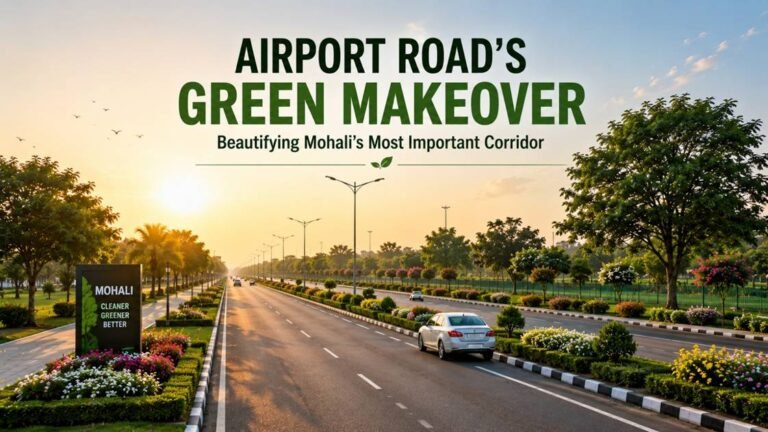
Perhaps the most visible example of this can be seen along Mohali’s major road corridors. Stretches of Airport Road, PR-7, sector-dividing roads and key entry points into the city are lined with landscaped medians, flowering plants, shrubs and thousands of trees. These green corridors do more than improve aesthetics. They help reduce dust, moderate temperatures, absorb pollutants and create a more pleasant urban environment for residents and commuters alike.
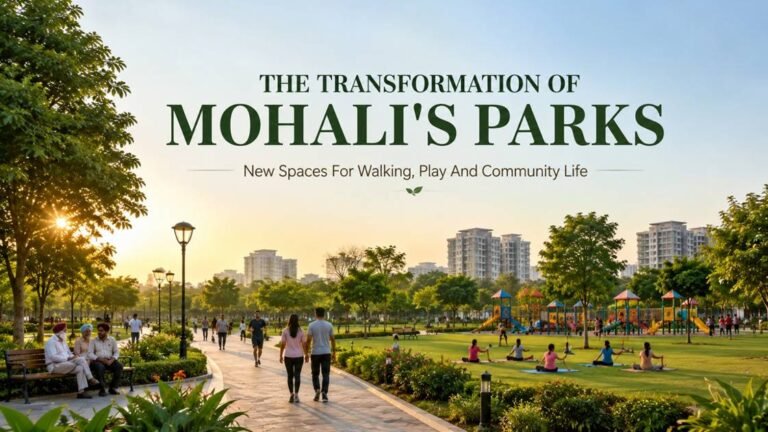
Neighbourhood parks have also become an increasingly important part of Mohali’s urban landscape. Across sectors old and new, parks are serving as community spaces where children play, senior citizens gather, families spend evenings and fitness enthusiasts begin their mornings. Walking tracks, open spaces, landscaping improvements and regular maintenance have helped many of these parks evolve from simple recreational areas into vibrant social spaces that contribute to both physical and mental well-being.
The city’s newer urban developments have also embraced the importance of green infrastructure. Areas such as Aerocity, IT City and other expanding sectors have incorporated parks, landscaped avenues and designated green spaces as part of their planning. Rather than treating greenery as an afterthought, many of these projects have integrated open spaces into the design of entire neighbourhoods, creating a more balanced urban environment as the city continues to grow.
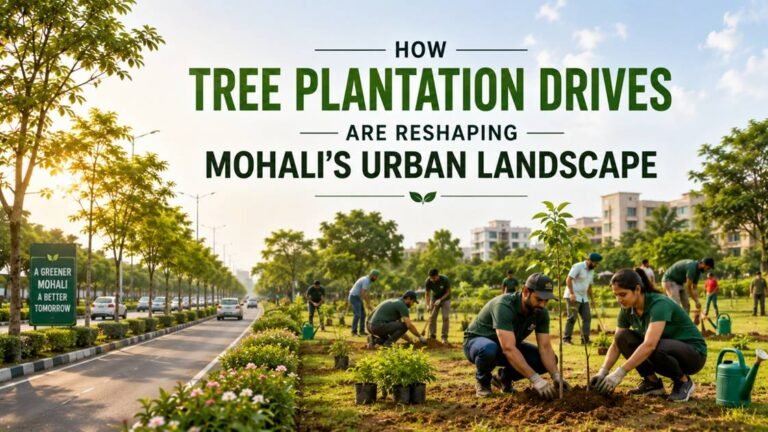
Tree plantation campaigns have played a significant role in this transformation. Every year, large-scale plantation drives involving government departments, educational institutions, environmental groups and local communities contribute thousands of saplings across the district. While planting trees is only the first step, these initiatives reflect a growing recognition that urban sustainability requires long-term investment in green assets that will benefit future generations.
Green belts have emerged as one of Mohali’s most valuable but often overlooked public resources. Running alongside roads and separating residential areas from traffic corridors, these stretches of greenery provide ecological benefits while enhancing the city’s visual appeal. They also contribute to biodiversity by creating habitats for birds and other urban wildlife that continue to coexist within the city’s expanding footprint.
The benefits of increasing green cover extend far beyond appearance. Trees and green spaces play an important role in improving air quality, reducing urban heat, managing stormwater and promoting healthier lifestyles. In a region that experiences intense summers, shaded roads, parks and tree-lined neighbourhoods help make public spaces more comfortable and usable throughout the year.
As Mohali continues its journey towards becoming a larger economic and residential hub, the importance of preserving and expanding green spaces will only grow. The challenge for any modern city is not simply to build more, but to build better. Roads, housing and commercial centres are essential components of development, but so too are parks, trees and open spaces that improve quality of life.
Today, the city’s expanding green cover stands as a reminder that development and environmental stewardship do not have to be competing goals. From landscaped boulevards and community parks to plantation drives and green belts, Mohali’s evolving urban landscape reflects a broader vision—one where growth is accompanied by a commitment to creating a cleaner, healthier and more liveable city for generations to come.

Mohali Dialogues
I work as a journalist and digital content writer for Mohali Dialogues, specializing in local news, civic issues, government updates, politics, education, business, and technology. I am committed to creating factual, well-researched, and engaging stories that help readers stay informed about the latest developments in Mohali, Punjab, and beyond.
Join the conversation
Keep it useful, respectful and relevant to the story.