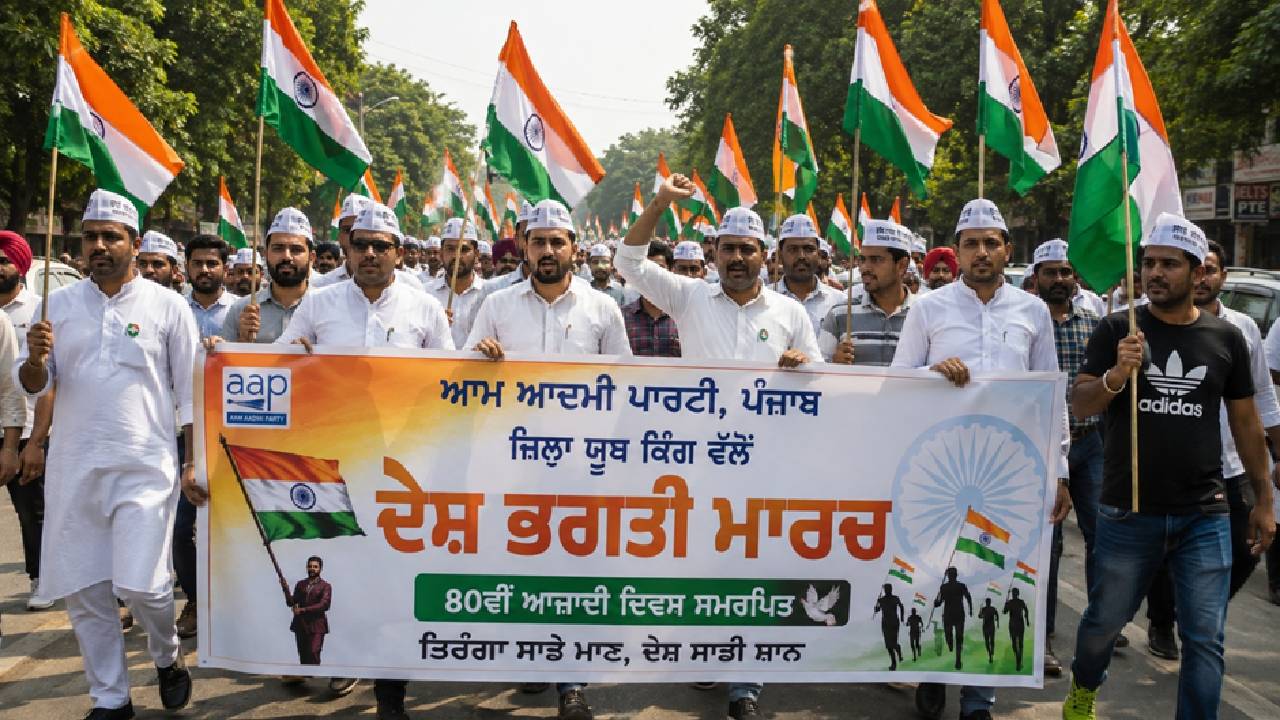
Patriotic marches dedicated to India’s 80th Independence Day were organised at various locations across Punjab by the District Youth Wing of the Aam Aadmi Party (AAP), bringing young volunteers and local residents together around the national flag and the spirit of patriotism.
The marches were organised as part of the activities leading up to Independence Day on August 15. Participants carried the Tricolour and took part in processions through local areas, paying tribute to the freedom fighters and remembering the sacrifices made during India’s struggle for independence.
The events were particularly focused on involving young people in Independence Day activities. Youth volunteers associated with the party participated in the marches and used the occasion to highlight the importance of national unity, civic responsibility and respect for the country’s democratic values.
The year 2026 marks the 80th Independence Day of India, making this year’s celebrations particularly significant. While the country completes 79 years of independence, August 15, 2026, is observed as the 80th Independence Day when the first Independence Day in 1947 is included in the sequence.
Across Punjab, Independence Day preparations have included flag-hoisting programmes, cultural activities, public gatherings and patriotic events. The youth-led marches added a public and community-oriented element to these celebrations.
The participants also paid tribute to Punjab’s contribution to India’s freedom movement. The state has a long history of involvement in the independence struggle, with numerous freedom fighters from Punjab playing important roles in different phases of the movement.
The marches provided an opportunity for young volunteers to connect with this history while taking the message of patriotism into local communities. Carrying the national flag through neighbourhoods also created a visible atmosphere ahead of the August 15 celebrations.
Organisers said the objective was to encourage greater participation of young people in national occasions and strengthen awareness about the values associated with India’s freedom. The events focused on the Tricolour as a symbol of the country’s unity and collective identity.
The programmes were held in different areas rather than being limited to a single central event. This allowed local youth workers and volunteers to organise activities within their respective districts and communities.
The participation of young people was a key feature of the marches. Youth organisations and political parties have increasingly used public marches, cycle rallies and other community events around Independence Day to connect patriotic celebrations with grassroots participation.
For Punjab, such programmes also provide an opportunity to remember the state’s historical connection with India’s freedom movement. From the Ghadar movement to the revolutionary activities associated with Bhagat Singh and his contemporaries, Punjab has remained closely connected with the country’s independence narrative.
As the country prepares to mark its 80th Independence Day, the marches organised by the AAP Punjab District Youth Wing added to the series of public programmes being held across the state. The events combined the national celebration with youth participation and community-level engagement. The Independence Day celebrations will culminate on August 15, when the national flag will be hoisted at official and public venues across Punjab and the rest of the country.

Mohali Dialogues
I work as a journalist and digital content writer for Mohali Dialogues, specializing in local news, civic issues, government updates, politics, education, business, and technology. I am committed to creating factual, well-researched, and engaging stories that help readers stay informed about the latest developments in Mohali, Punjab, and beyond.
Join the conversation
Keep it useful, respectful and relevant to the story.