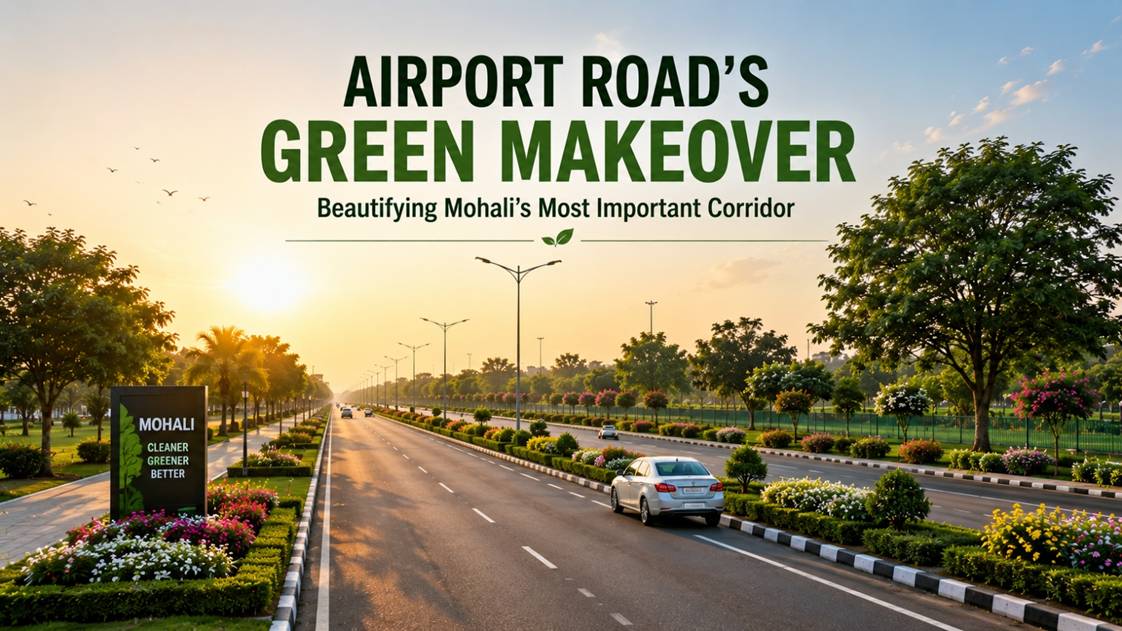
For thousands of residents, professionals and visitors, Airport Road is often the first impression of Mohali. Stretching across some of the city’s most important urban zones and connecting key residential, commercial and institutional areas, the corridor has become far more than a transportation route. Over the years, it has evolved into one of Mohali’s most recognizable urban landmarks—a showcase of how infrastructure and environmental planning can work together to shape a city’s identity.
As Mohali expanded rapidly, Airport Road emerged as a critical growth corridor linking established sectors with newer developments such as Aerocity, IT City and emerging residential communities. With increasing traffic and urban activity, the importance of maintaining the corridor’s visual appeal and environmental quality became increasingly apparent. Today, the transformation of Airport Road reflects a broader effort to create a cleaner, greener and more attractive urban environment.
One of the most visible aspects of this transformation is the extensive landscaping that lines the corridor. Tree-lined stretches, landscaped medians, flowering plants, ornamental shrubs and carefully maintained green belts have significantly changed the character of the road. Instead of functioning solely as a transportation artery, Airport Road now presents a welcoming urban landscape that combines mobility with aesthetics.
The impact of these green elements extends beyond appearance. Trees planted along major roads help absorb pollutants, reduce dust levels and provide shade during Punjab’s intense summer months. Green belts and landscaped medians also contribute to lowering the urban heat effect while creating a more comfortable environment for commuters and nearby residents. In a rapidly urbanising city, such environmental benefits are becoming increasingly valuable.
Airport Road’s beautification has also enhanced Mohali’s image as a modern and well-planned city. Wide roads, organized landscaping and well-maintained public spaces create a sense of order and civic pride. For visitors arriving from Chandigarh International Airport or travelling through the city, the corridor offers a glimpse of Mohali’s aspirations as a progressive urban centre that values both development and quality of life.
The corridor’s transformation has become particularly important as major economic activity continues to concentrate along its route. Corporate offices, educational institutions, healthcare facilities, commercial centres and residential projects have all emerged in the surrounding areas. The presence of green infrastructure helps balance this urban growth, ensuring that development is accompanied by environmental considerations rather than replacing them.
Another important aspect of Airport Road’s makeover is its role in improving the everyday experience of city residents. Attractive streetscapes contribute to a more pleasant commute, encourage outdoor activity and enhance the visual character of surrounding neighbourhoods. Research from cities around the world has consistently shown that well-landscaped public spaces can positively influence both mental well-being and perceptions of urban quality.
The beautification efforts also demonstrate how roads can serve purposes beyond transportation. Modern urban planning increasingly recognizes that streets are public spaces that contribute to a city’s identity. Through landscaping, greenery and thoughtful design, Airport Road has become an example of how infrastructure can help create a more liveable urban environment.
As new developments continue to emerge around Aerocity, IT City and adjoining sectors, Airport Road will remain one of Mohali’s most important growth corridors. Maintaining and expanding its green character will play a crucial role in ensuring that the city continues to grow in a sustainable and visually appealing manner.
Today, Airport Road stands as more than just a route connecting destinations. It has become a symbol of Mohali’s evolving urban landscape—one where development, environmental stewardship and civic pride come together. Its transformation serves as a reminder that even the busiest transportation corridors can contribute to building a cleaner, greener and more attractive city for future generations.

Mohali Dialogues
I work as a journalist and digital content writer for Mohali Dialogues, specializing in local news, civic issues, government updates, politics, education, business, and technology. I am committed to creating factual, well-researched, and engaging stories that help readers stay informed about the latest developments in Mohali, Punjab, and beyond.
Join the conversation
Keep it useful, respectful and relevant to the story.