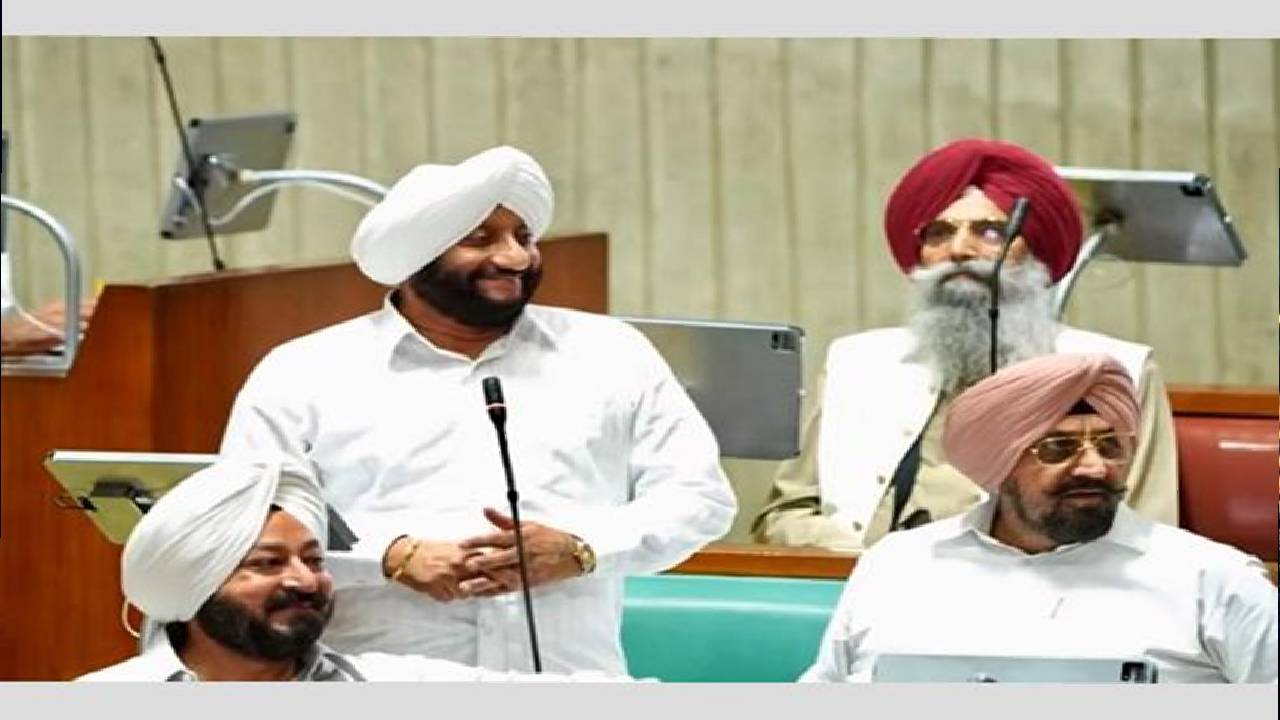
The long-pending demand of residents living in low and middle-income group housing in Mohali echoed in the Punjab Assembly after Mohali MLA Kulwant Singh urged the state government to expedite the implementation of a comprehensive Need-Based Policy for residential flats.
Raising the issue during the Assembly session, the MLA highlighted the difficulties faced by thousands of families residing in government-developed housing schemes. He said many homeowners have carried out small structural modifications over the years to accommodate growing families, but the absence of a revised policy has left many of these alterations outside the existing building norms.
Kulwant Singh informed the House that the issue has been affecting residents for several years, particularly those living in Low Income Group (LIG), Middle Income Group (MIG), Economically Weaker Section (EWS) and other government-allotted housing schemes. He stressed that many of these modifications were driven by genuine family requirements rather than commercial intentions.
According to the MLA, residents have repeatedly approached public representatives seeking a practical solution that would allow need-based extensions and regularisation of eligible constructions while ensuring compliance with safety and planning standards. He urged the government to formulate a policy that balances urban planning regulations with the realities faced by homeowners.
The proposed policy is expected to benefit a large number of families who have been waiting for clarity on issues related to approvals, property documentation and building regularisation. Many residents have also faced difficulties in obtaining financial services and completing property-related formalities due to deviations from the original building plans.
Kulwant Singh said a well-defined policy would provide much-needed relief to middle-class families while bringing greater transparency to the approval process. He added that any decision should safeguard planned urban development and ensure that structural safety norms are not compromised.
The issue has remained a recurring concern among residents of several Mohali sectors, where flats constructed decades ago no longer adequately meet the space requirements of growing families. Homeowners have argued that changing lifestyles and expanding household needs have made limited structural modifications a necessity in many cases.
Urban planning experts believe that a carefully drafted need-based policy can help resolve long-standing disputes while reducing unauthorised construction. They say clear guidelines for permissible alterations would benefit both homeowners and planning authorities by encouraging compliance with approved regulations.
The Assembly discussion has renewed hope among residents that the government may move towards a revised framework for need-based changes. While no final decision has been announced, the issue receiving attention in the legislature is being seen as a positive step towards addressing one of Mohali’s long-standing urban housing concerns. If implemented, the proposed policy could provide relief to thousands of homeowners while ensuring that future modifications take place within a regulated and legally compliant framework. The move is also expected to simplify property transactions and improve confidence among residents living in government-developed housing colonies.

Mohali Dialogues
I work as a journalist and digital content writer for Mohali Dialogues, specializing in local news, civic issues, government updates, politics, education, business, and technology. I am committed to creating factual, well-researched, and engaging stories that help readers stay informed about the latest developments in Mohali, Punjab, and beyond.

Join the conversation
Keep it useful, respectful and relevant to the story.