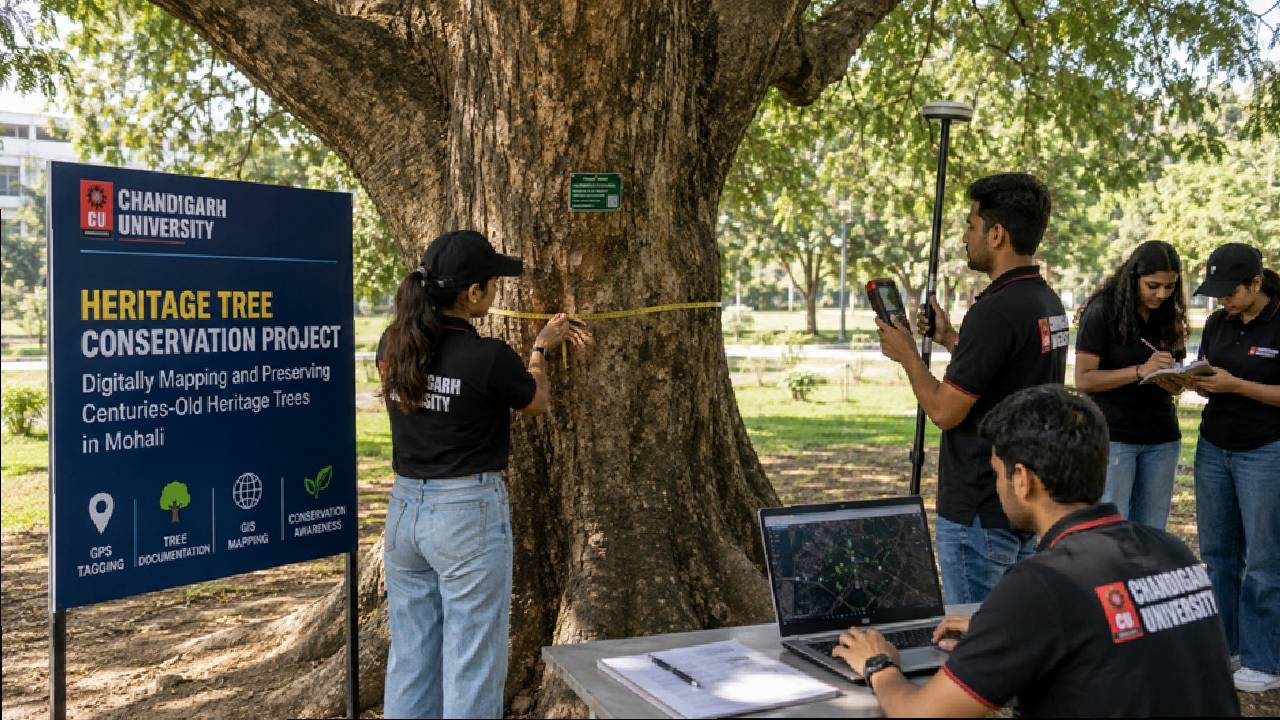
In a significant step towards environmental conservation and digital documentation of natural heritage, Chandigarh University has launched a Heritage Tree Conservation Project aimed at identifying, digitally mapping and preserving centuries-old trees across Mohali and its surrounding areas.
The initiative seeks to create a comprehensive digital inventory of heritage trees using advanced technologies such as Geographic Information Systems (GIS), GPS mapping and digital documentation. The project is expected to help researchers, environmentalists and local authorities monitor the health, age and ecological significance of some of the region’s oldest trees while promoting their long-term conservation.
According to university officials, the project combines environmental science with modern technology to safeguard living natural heritage that has stood witness to generations of social and ecological change. The digital mapping exercise will document each heritage tree’s location, species, estimated age, physical characteristics and ecological value, creating a permanent digital record for future conservation efforts.
Experts associated with the project believe that heritage trees play an important role beyond their environmental benefits. Many of these trees have historical, cultural and community significance, often serving as landmarks that have existed long before modern urban development transformed the region. Preserving them helps maintain the ecological identity of rapidly expanding urban areas like Mohali.
As part of the initiative, research teams and students will conduct extensive field surveys to identify mature and historically significant trees. Modern mapping tools will be used to record precise geographical coordinates, while digital databases will store detailed information that can be updated periodically to monitor changes in tree health and surrounding environmental conditions.
The project also aims to raise public awareness about the importance of protecting mature trees, particularly in fast-growing urban centres where infrastructure development often places pressure on existing green cover. By creating a scientifically documented inventory, the university hopes to encourage evidence-based conservation planning and informed decision-making during future development projects.
Environmental experts have welcomed the initiative, noting that mature trees provide multiple ecological benefits, including improving air quality, reducing urban heat, supporting biodiversity and enhancing groundwater recharge. They also serve as habitats for numerous bird and insect species, making them an essential component of sustainable urban ecosystems.
The digital database is expected to support academic research, biodiversity studies and urban planning while also creating opportunities for citizen participation in conservation efforts. In the future, the mapped information may be integrated into educational platforms, allowing students, researchers and the general public to learn more about the region’s valuable natural heritage.
The initiative reflects the growing use of digital technologies in environmental management, where geospatial mapping and data-driven monitoring are increasingly being adopted to protect natural resources. Similar projects around the world have demonstrated that accurate digital records help authorities prioritise conservation measures and respond more effectively to environmental challenges.
With Mohali witnessing rapid urban expansion over the past decade, conservationists believe documenting heritage trees has become increasingly important. The Chandigarh University project is expected to contribute towards preserving these irreplaceable natural assets while promoting a balance between urban development and environmental sustainability. By combining technology, research and community awareness, the Heritage Tree Conservation Project aims to ensure that Mohali’s oldest trees continue to be protected for future generations, strengthening the city’s commitment to sustainable development and ecological conservation.

Mohali Dialogues
I work as a journalist and digital content writer for Mohali Dialogues, specializing in local news, civic issues, government updates, politics, education, business, and technology. I am committed to creating factual, well-researched, and engaging stories that help readers stay informed about the latest developments in Mohali, Punjab, and beyond.

Join the conversation
Keep it useful, respectful and relevant to the story.