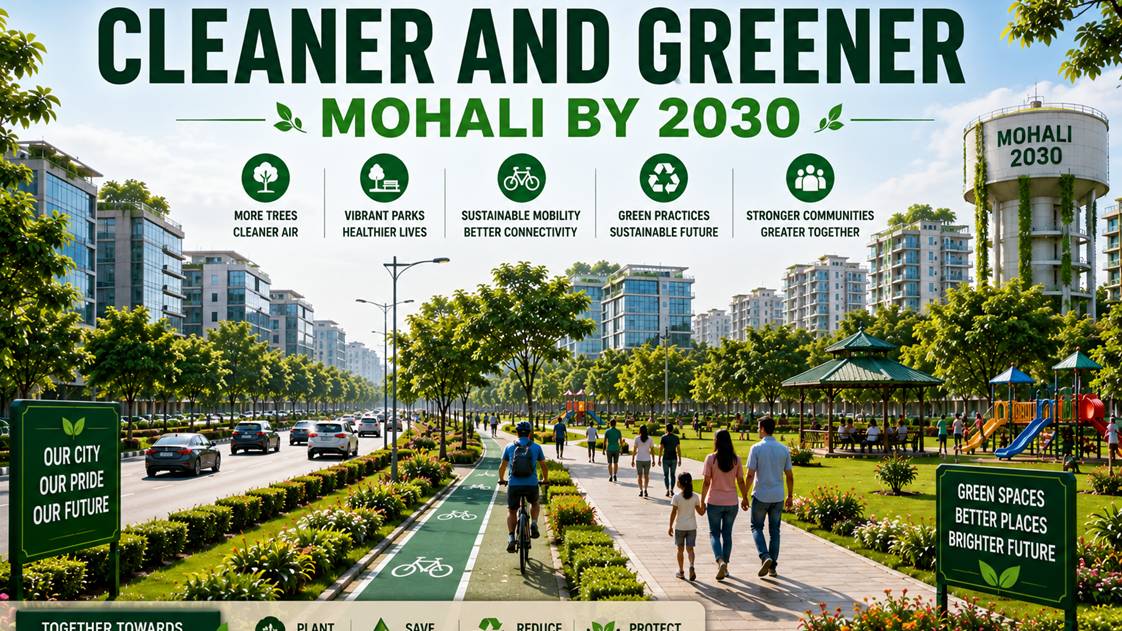
Cities are often defined by the choices they make today. The roads they build, the neighbourhoods they develop and the public spaces they create all shape the lives of future generations. As Mohali continues its journey as one of North India’s fastest-growing urban centres, an important question emerges: what kind of city will it become by the end of this decade? Increasingly, the answer lies not only in economic growth and infrastructure development but also in environmental sustainability, public well-being and the creation of a greener urban future.
The vision of a cleaner and greener Mohali by 2030 is about building a city where development and environmental responsibility move forward together. It is a vision that recognizes that parks, green belts, tree-lined roads and public spaces are not luxuries but essential components of a modern and livable city. As urban populations grow and environmental challenges become more complex, the importance of these assets will only continue to increase.
Over the past several years, Mohali has already witnessed significant progress in expanding green infrastructure. Tree plantation drives, landscaped road corridors, neighbourhood parks and beautification initiatives have contributed to a more attractive and environmentally conscious urban landscape. These efforts provide a strong foundation for the city’s long-term sustainability goals.
Looking toward 2030, expanding green cover remains one of the most important priorities. Trees improve air quality, reduce urban temperatures and contribute to biodiversity. Increasing plantation efforts across roads, parks, institutional campuses and emerging sectors can help create a more resilient urban environment capable of adapting to future environmental challenges.
Parks and public spaces will also play a central role in shaping Mohali’s future. As residential development continues to expand, accessible green spaces will become increasingly important for recreation, fitness and community interaction. Ensuring that every neighbourhood has access to well-maintained parks can help improve quality of life while promoting healthier lifestyles.
Green belts represent another critical component of this vision. These landscaped corridors already contribute significantly to Mohali’s environmental quality and visual identity. Strengthening and preserving these assets will help maintain ecological balance while ensuring that future development remains connected to nature.
The city’s emerging growth corridors—including Aerocity, IT City and future residential sectors—offer opportunities to integrate sustainability directly into urban planning. By incorporating open spaces, landscaping and green infrastructure into new developments from the beginning, Mohali can avoid many of the environmental challenges faced by older cities that grew without similar planning frameworks.
Environmental sustainability also requires active community participation. Residents, schools, businesses and local organizations all have a role to play in supporting cleanliness, conservation and environmental awareness. A greener city is ultimately built not only through government initiatives but also through collective civic responsibility.
Technology and innovation can further support the city’s environmental goals. Smart irrigation systems, sustainable landscaping practices, efficient maintenance methods and environmentally conscious urban planning can help maximize the impact of green infrastructure while ensuring long-term sustainability.
The economic benefits of a cleaner and greener city should not be underestimated. Attractive public spaces, cleaner environments and higher quality of life make cities more desirable places to live, work and invest. As Mohali continues to strengthen its position as a regional hub for education, healthcare, technology and business, environmental quality will become an increasingly important competitive advantage.
Perhaps most importantly, the vision for 2030 is about creating a city that future generations will be proud to inherit. The decisions made today regarding parks, trees, public spaces and environmental protection will influence the character of Mohali for decades to come. Every green belt preserved, every park maintained and every tree planted contributes to a legacy that extends far beyond the present.
The journey toward a cleaner and greener Mohali is not defined by a single project or initiative. It is the result of continuous efforts to improve public spaces, strengthen environmental stewardship and enhance quality of life. Progress may happen gradually, but its cumulative impact can be transformative.
By 2030, the ideal Mohali is one where tree-lined roads connect vibrant neighbourhoods, parks serve as community gathering spaces, green infrastructure supports environmental resilience and public spaces remain clean, accessible and welcoming. It is a city that embraces growth without losing sight of sustainability.
As Mohali looks ahead to the future, this vision offers a clear direction: a city that is not only larger and more prosperous, but also cleaner, greener and better prepared for the generations that will call it home.

Mohali Dialogues
I work as a journalist and digital content writer for Mohali Dialogues, specializing in local news, civic issues, government updates, politics, education, business, and technology. I am committed to creating factual, well-researched, and engaging stories that help readers stay informed about the latest developments in Mohali, Punjab, and beyond.
Join the conversation
Keep it useful, respectful and relevant to the story.