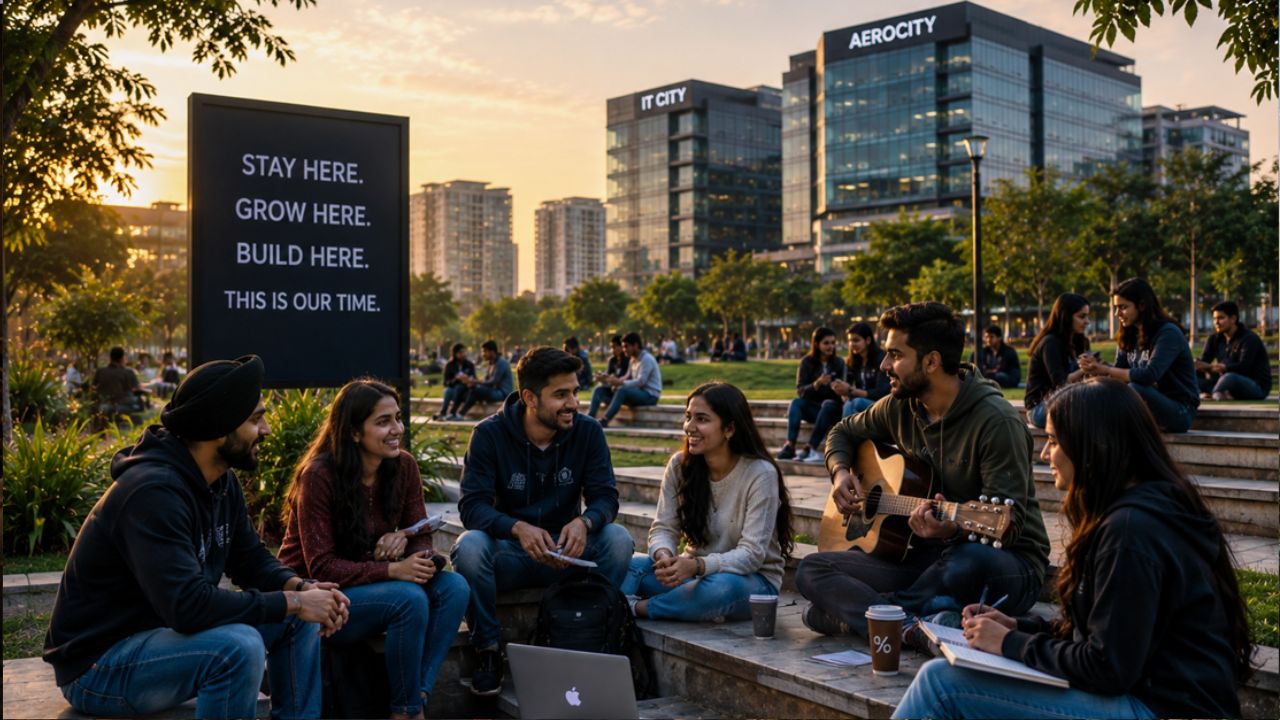
For a long time, ambition in Punjab came with an unspoken assumption: eventually, you leave.
Students prepared for exams with migration plans already in mind. Young professionals searched for opportunities outside the state almost by default. Even families often viewed success through the lens of relocation.
In Mohali today, that thinking is beginning to shift.
Not completely. Not suddenly. But steadily enough for residents to notice.
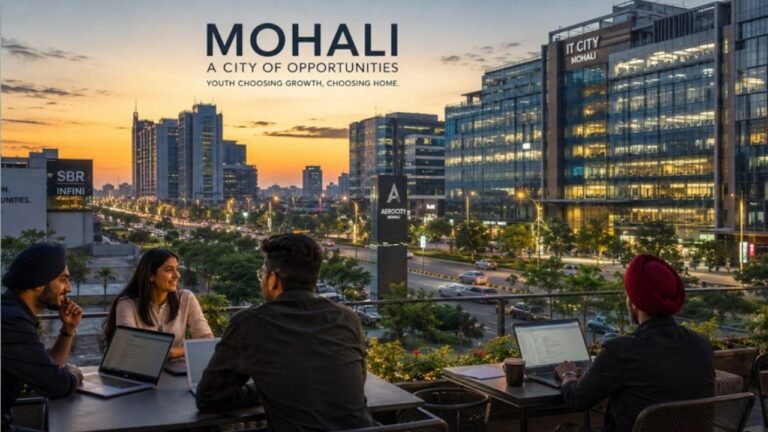
Across the city’s growing commercial corridors, coworking spaces, cafés and educational hubs, a younger urban culture is emerging — one that increasingly believes professional growth and modern lifestyles can exist within Punjab itself.
The change is visible in small but important ways.
Startup discussions happening inside cafés. Young freelancers building businesses locally. Students staying back after graduation to explore opportunities in Mohali instead of immediately planning exits. Professionals returning from larger cities because the city now feels more economically active than before.
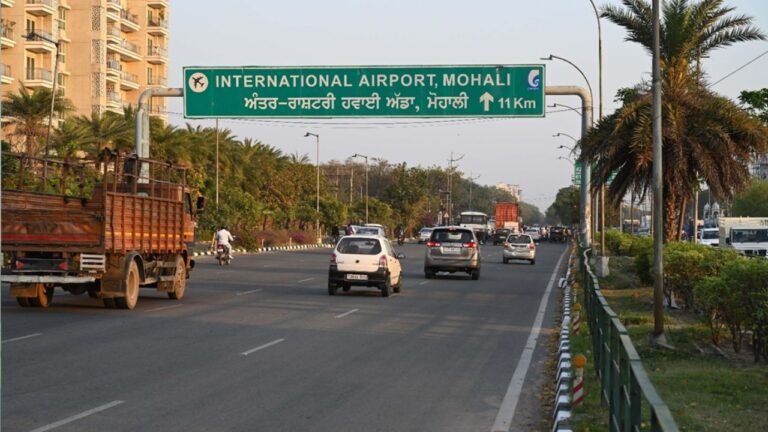
Under the leadership of Bhagwant Mann, Punjab’s emphasis on infrastructure, investment and urban development has helped position Mohali as one of the state’s strongest growth centres. Expanding roads, rising commercial activity and continuous urban development have collectively strengthened the city’s professional ecosystem.
Residents also associate this changing atmosphere with the development-focused governance approach of Kulwant Singh. Citizens say Mohali’s politics increasingly revolves around growth, connectivity and future planning because public expectations from the city itself have become much larger.
Importantly, Mohali’s appeal today goes beyond infrastructure alone.
Young people say the city now offers a lifestyle balance that feels difficult to find elsewhere. It feels modern without becoming overwhelming. Professional without feeling impersonal. Ambitious without losing social familiarity.
That balance is becoming one of Mohali’s biggest strengths.
Libraries remain active late into the night. Cafés function as informal workspaces. New commercial hubs are creating employment opportunities. Fitness culture, digital businesses and startup ecosystems are gradually becoming part of everyday city life.
Many residents believe this shift carries broader importance for Punjab.
For years, conversations around the state focused heavily on migration and brain drain. Mohali’s evolving urban culture is beginning to create a counter-narrative — one where talented young people can realistically imagine building careers and futures within Punjab itself.
The city’s changing psychology is influencing families too. Parents increasingly describe Mohali as a place where children can pursue opportunities while remaining closer to home and community networks.
Of course, challenges remain significant. Residents continue demanding larger-scale private investment, stronger public transport and more employment generation to ensure the city’s momentum translates into long-term economic stability.
But despite those concerns, optimism among younger residents feels noticeably stronger than before.
Because for many people growing up in Mohali today, the city no longer feels like a place they must eventually outgrow.
Increasingly, it feels like a place worth building a future in.

Mohali Dialogues
I work as a journalist and digital content writer for Mohali Dialogues, specializing in local news, civic issues, government updates, politics, education, business, and technology. I am committed to creating factual, well-researched, and engaging stories that help readers stay informed about the latest developments in Mohali, Punjab, and beyond.
Join the conversation
Keep it useful, respectful and relevant to the story.