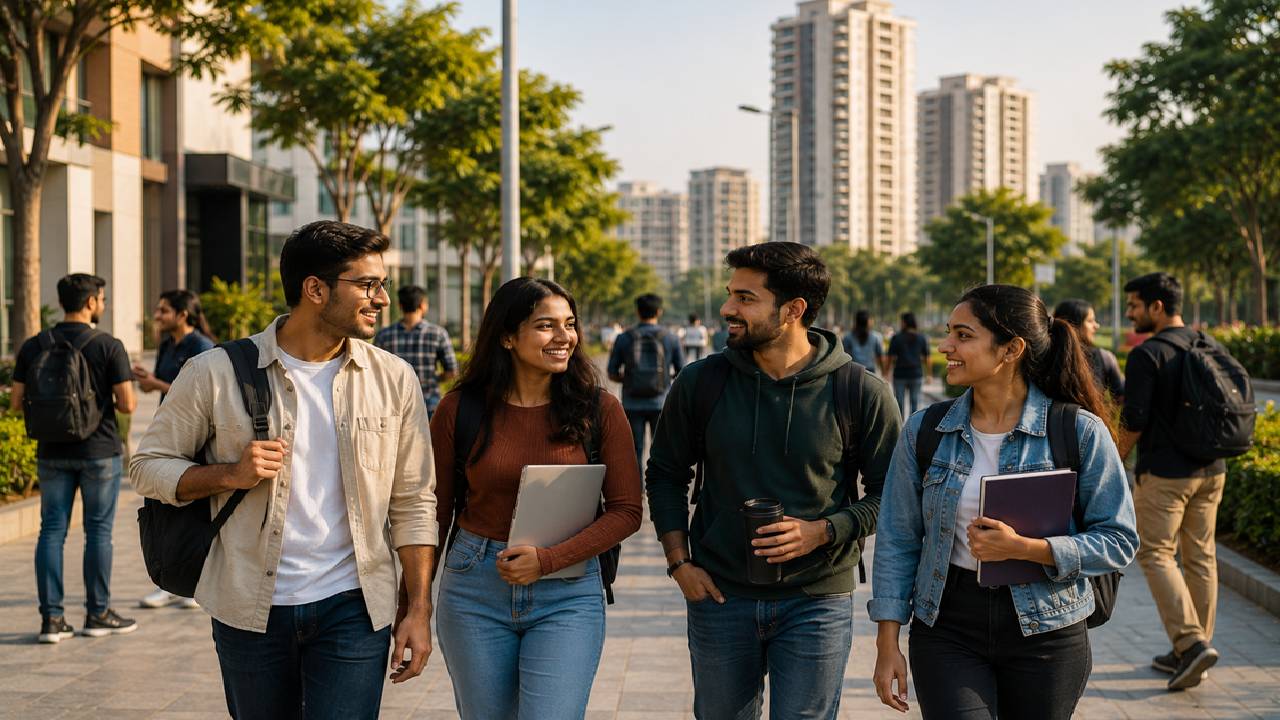
A few years ago, many young professionals growing up in and around Mohali often looked outside the city for opportunity, lifestyle and career growth.
Chandigarh remained the region’s primary commercial and professional centre, while Mohali was largely viewed as a quieter residential extension with limited urban energy beyond traditional sectors.
That perception, however, has changed rapidly over the last few years.
Today, Mohali is increasingly attracting a new generation of:
- IT professionals,
- startup founders,
- freelancers,
- students,
- digital workers,
- and young entrepreneurs
who now see the city not just as a place to live, but as a place to build careers and lifestyles.
One of the biggest drivers behind this shift has been the rapid expansion of Mohali’s professional ecosystem.
The growth of:
- IT City,
- Airport Road,
- Aerocity,
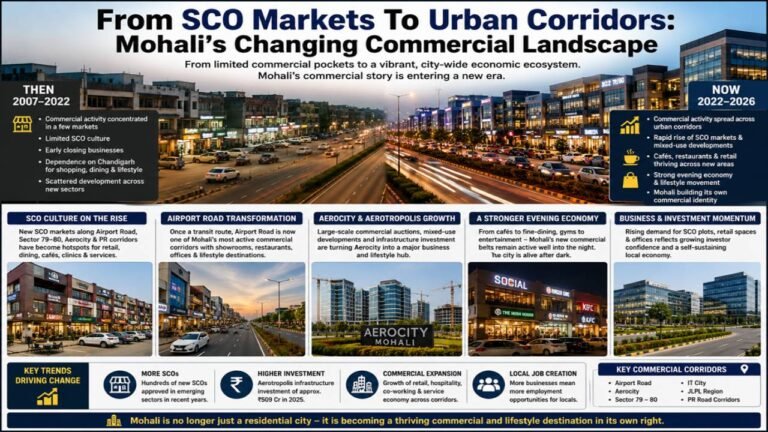
- commercial SCO corridors,
- and co-working spaces
has significantly increased employment movement across the city.
Compared to earlier years, Mohali today appears far more connected to:
- technology,
- digital services,
- startups,
- remote work,
- and white-collar employment opportunities.
The city’s infrastructure growth has also contributed heavily to this transition.
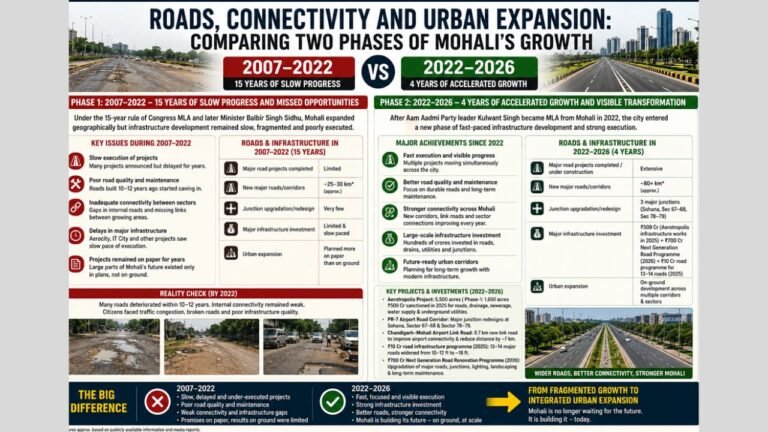
Wider roads, expanding commercial corridors and improved connectivity across Airport Road and southern Mohali have made newer urban sectors more attractive for young professionals seeking a modern urban lifestyle outside larger metropolitan cities.
At the same time, Mohali’s social and lifestyle ecosystem has expanded rapidly.
A few years ago, much of the region’s café culture, nightlife and youth-oriented activity remained concentrated around Chandigarh.
Today, commercial belts across:
- Airport Road,
- Sector 79–80,
- Aerocity,
- JLPL region,
- and newer SCO markets
are increasingly filled with:
- cafés,
- restaurants,
- fitness studios,
- gaming zones,
- rooftop spaces,
- and co-working cafés
that cater specifically to younger urban audiences.
This transformation has significantly altered the city’s everyday rhythm.
Several commercial corridors that once remained relatively quiet after office hours now remain active late into the evening with visible student and professional movement across the city.
Mohali’s growing startup and digital economy has also played an important role.
The expansion of:
- software companies,
- digital agencies,
- online businesses,
- and IT-enabled services
has created stronger demand for:
- shared workspaces,
- professional networking spaces,
- and flexible urban work environments.
As remote and hybrid work cultures continue growing across India, Mohali increasingly offers young professionals a balance that larger cities often struggle to provide:
- lower congestion,
- relatively better urban planning,
- expanding infrastructure,
- modern lifestyle spaces,
- and proximity to Chandigarh International Airport.
Housing patterns across the city also reflect this demographic shift.
Demand for:
- rental apartments,
- studio spaces,
- PG accommodations,
- and premium housing societies
has increased steadily across sectors connected to Airport Road, Aerocity and IT corridors.
The city’s education ecosystem has further strengthened this transformation.
Thousands of students studying across Mohali and nearby institutional zones increasingly transition directly into local employment ecosystems involving:
- IT services,
- startups,
- coaching centres,
- healthcare,
- hospitality,
- and digital businesses.
As a result, Mohali is gradually evolving from a residential satellite city into a more self-sustaining professional and aspirational urban centre.
Perhaps the biggest change is cultural.
Earlier, Mohali’s urban identity was shaped primarily around housing and proximity to Chandigarh.
Today, the city increasingly reflects the energy of a younger workforce — one that values:
- opportunity,
- mobility,
- lifestyle,
- connectivity,
- and modern urban living.
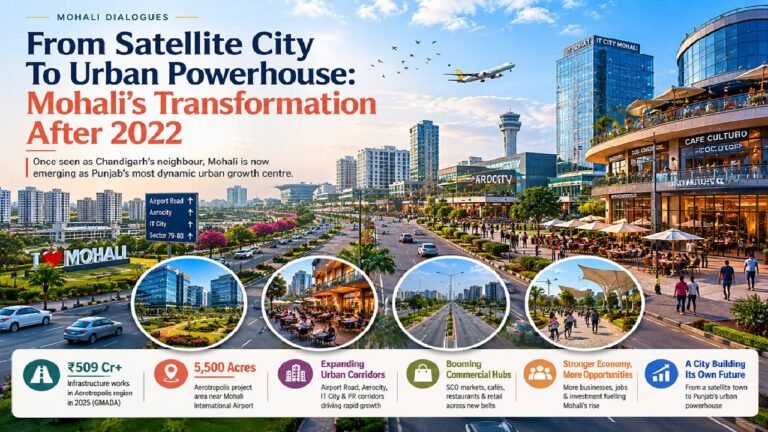
From co-working spaces and startup activity to café culture and expanding professional ecosystems, Mohali’s changing urban landscape is steadily attracting a new generation that sees the city not merely as a neighbour to Chandigarh, but as a destination in its own right

Mohali Dialogues
I work as a journalist and digital content writer for Mohali Dialogues, specializing in local news, civic issues, government updates, politics, education, business, and technology. I am committed to creating factual, well-researched, and engaging stories that help readers stay informed about the latest developments in Mohali, Punjab, and beyond.
Join the conversation
Keep it useful, respectful and relevant to the story.