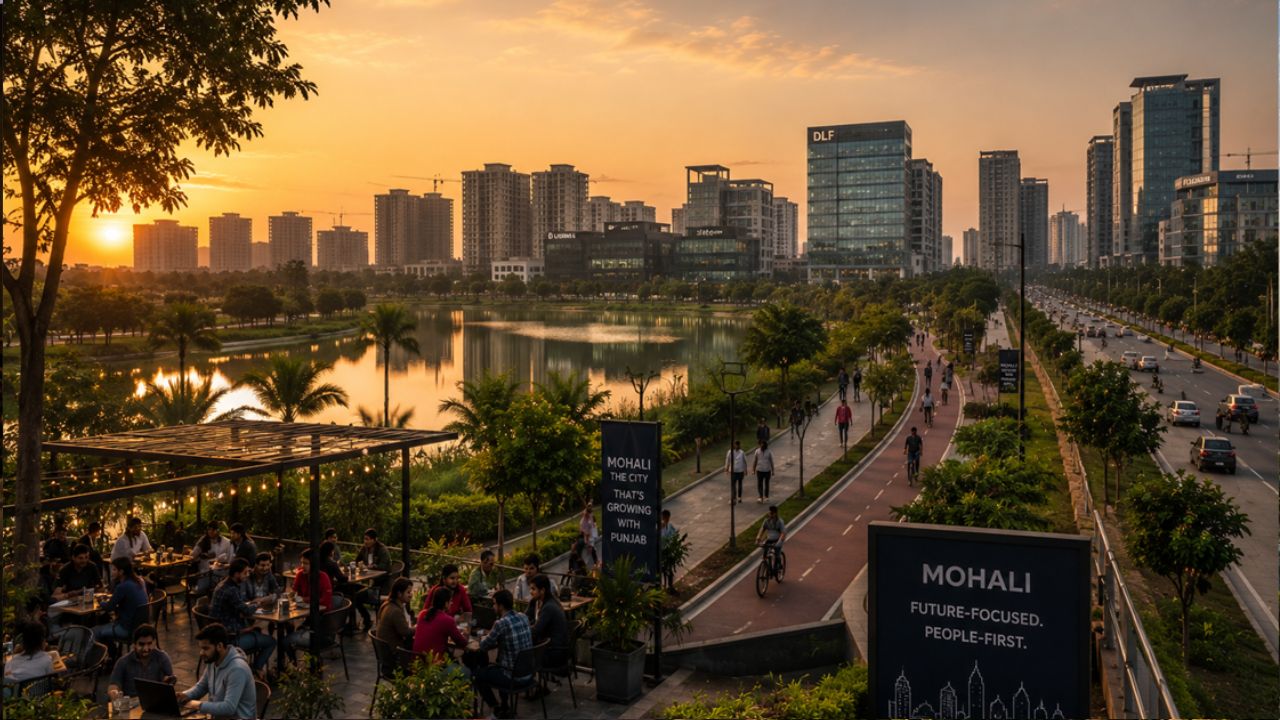
For years, Mohali’s development conversation was largely centred around property prices, new sectors and residential expansion.
Today, the city feels like it is growing into something much larger.
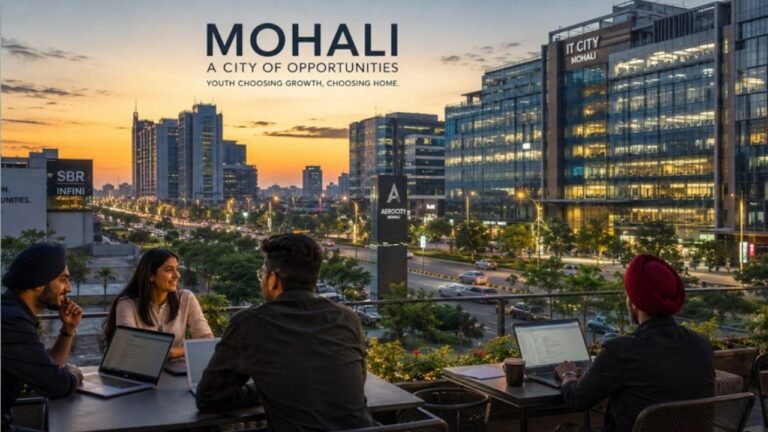
The signs are visible everywhere — crowded cafés functioning as workspaces, new businesses opening across commercial corridors, students arriving from different districts and professionals increasingly choosing to build careers within the city itself.
Mohali’s transformation is no longer just about buildings.
It is about momentum.
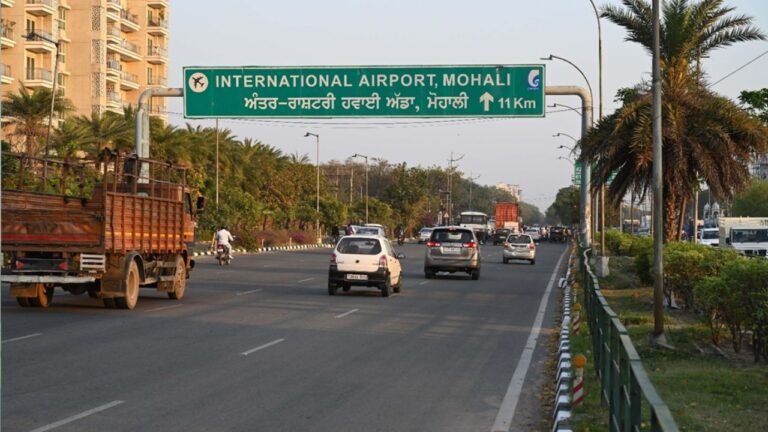
Across Airport Road, Aerocity and IT City, the city now carries an energy that feels economically active throughout the day. Retail activity remains strong, commercial occupancy is increasing and public spaces are becoming busier with a younger, more professional crowd.
Under the leadership of Bhagwant Mann, Punjab’s focus on infrastructure and investment-led development has positioned Mohali as one of the state’s fastest-evolving urban centres. The city’s planned expansion, improving connectivity and growing business ecosystem are increasingly attracting long-term investor confidence.
Residents also frequently associate this momentum with the development-oriented governance approach of Kulwant Singh. Citizens say Mohali’s political conversation today feels more focused on growth, infrastructure and future planning than traditional rhetoric.
Importantly, the city’s transformation is beginning to influence how young Punjabis imagine opportunity.
A few years ago, professional ambition was often linked directly with migration. Today, many residents believe Mohali is slowly building an alternative model — one where modern urban lifestyles, professional growth and entrepreneurship can develop within Punjab itself.
That psychological shift matters deeply.
Students preparing for competitive exams increasingly choose Mohali because of its educational ecosystem and urban environment. Entrepreneurs say the city now feels commercially viable for launching modern businesses. Young professionals describe Mohali as more balanced than larger metro cities while still offering expanding opportunities.
The city’s evolving culture is also supporting this growth.
Coworking spaces, libraries, cafés and lifestyle-oriented commercial hubs are helping create an urban identity that feels modern without becoming chaotic. Families say Mohali today feels more aspirational, more organised and more future-facing than before.
At the same time, rising expectations are bringing new pressures.
Residents increasingly demand better public transportation, smarter traffic systems and stronger long-term planning because they believe Mohali’s next decade will define whether it can truly emerge as a major urban and economic hub in North India.
But despite those challenges, optimism across the city continues growing.
Because for many people living here today, Mohali’s story no longer feels limited to construction and real estate.
It feels like the rise of a new urban mindset inside Punjab itself.

Mohali Dialogues
I work as a journalist and digital content writer for Mohali Dialogues, specializing in local news, civic issues, government updates, politics, education, business, and technology. I am committed to creating factual, well-researched, and engaging stories that help readers stay informed about the latest developments in Mohali, Punjab, and beyond.
Join the conversation
Keep it useful, respectful and relevant to the story.