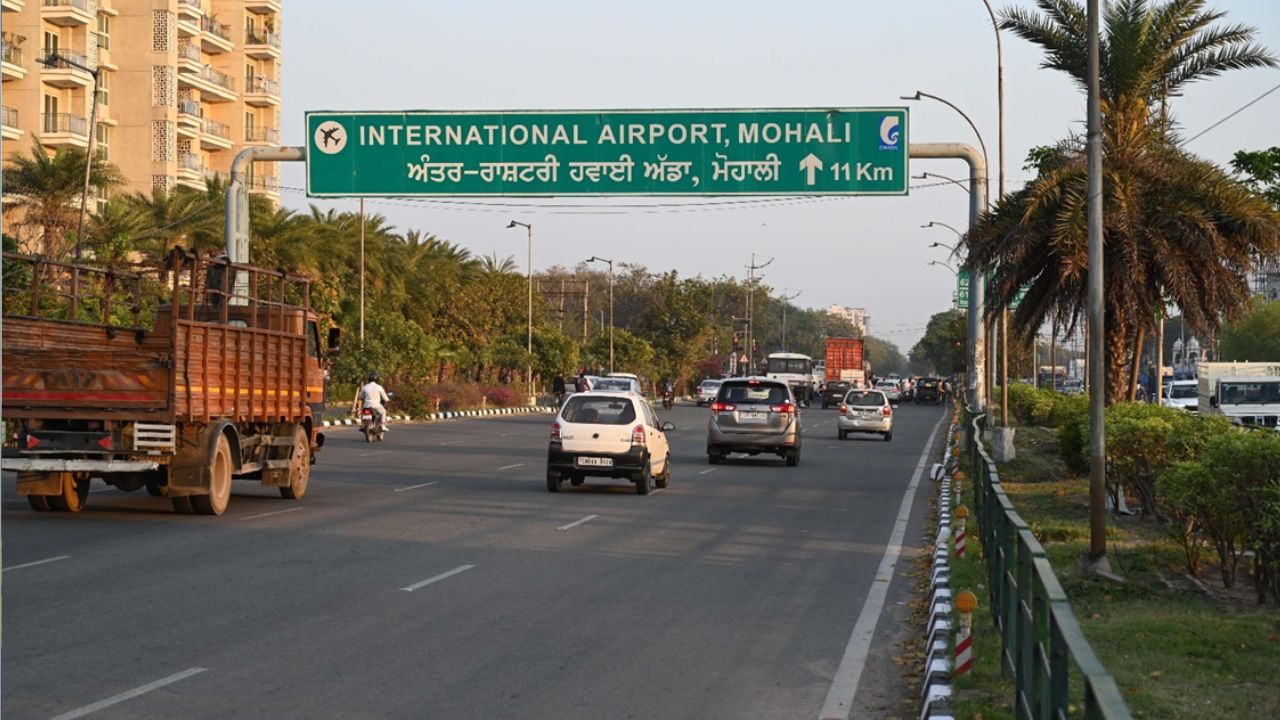
There was a time when Mohali was seen as Chandigarh’s quieter neighbour — a planned city with wide roads, decent sectors and growing real estate, but without a strong economic identity of its own. That perception is rapidly changing.
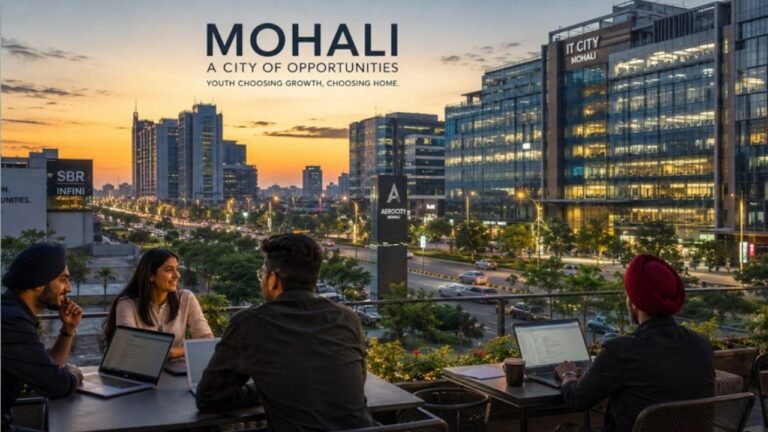
Today, from Aerocity’s expanding commercial landscape to the rise of IT parks, coworking hubs and startup offices across the city, Mohali is beginning to look and behave like a serious urban economic centre. Young professionals working in technology, digital marketing, architecture, design and consulting increasingly describe the city as “Punjab’s most future-ready urban space.”
Over the last few years, Mohali has witnessed visible growth in infrastructure and commercial activity. The development of road networks around Airport Road, the continued expansion of Aerocity, the strengthening of IT City and the arrival of new private investment have collectively changed the city’s economic mood. Local business owners say footfall has increased significantly in emerging commercial sectors, while property consultants report growing interest from professionals looking to settle in Mohali instead of moving to Gurgaon, Noida or Bengaluru.
Much of this transformation is being linked to the Punjab Government’s push to position Mohali as a modern economic and technology hub. Under the leadership of Bhagwant Mann, the state government has repeatedly focused on investment, ease of doing business and urban infrastructure in Mohali. Industry interactions, startup encouragement and connectivity projects have helped create a stronger sense of confidence around the city’s future.
At the local level, residents and traders often point toward the active role played by Kulwant Singh in highlighting civic development issues and maintaining focus on infrastructure expansion in the constituency. Whether it is road connectivity, public facilities or urban development conversations, many residents believe Mohali today feels more politically aligned with growth and city-building than it did a decade ago.
For young professionals, perhaps the biggest change is psychological. Earlier, many students viewed Mohali only as a temporary stop before leaving Punjab for jobs elsewhere. Now, a growing section of youth sees genuine long-term opportunities emerging within the city itself. Cafés across sectors 68, 79 and Aerocity are increasingly filled with freelancers, startup founders and remote workers — something that would have been difficult to imagine a few years ago.
The city’s educational ecosystem is also feeding into this growth. Institutions around Mohali continue to produce engineering, management and design graduates, while the improving urban environment is helping retain some of that talent locally. Real estate growth, retail expansion and rising commercial activity are creating a multiplier effect that is slowly reshaping the city’s economy.
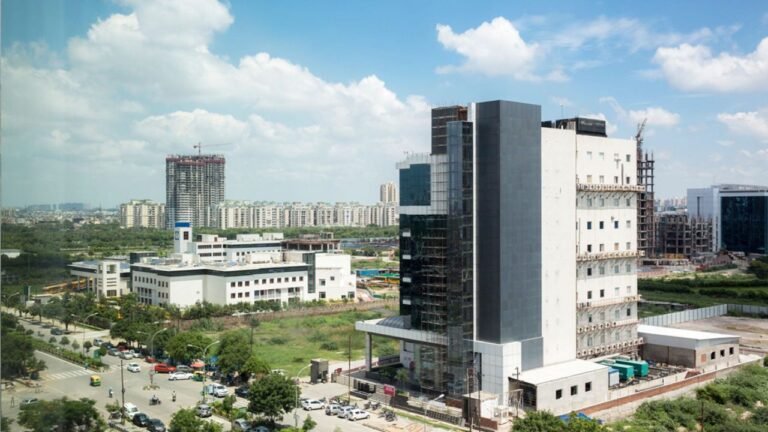
Importantly, Mohali’s growth story is not only about glass buildings and commercial projects. Residents say the city now carries a different energy — faster, more ambitious and more confident. Evening traffic around Airport Road, packed cafés in Aerocity and the rapid pace of new construction all point toward a city that is evolving beyond its old identity.
There is still a long way to go before Mohali can compete with India’s largest technology centres. Challenges related to traffic management, public transport and long-term urban planning remain important. But for the first time in many years, people across the city are beginning to believe that Mohali is no longer just developing — it is transforming.
And for many residents, that transformation finally makes Mohali feel like a real tech city.

Mohali Dialogues
I work as a journalist and digital content writer for Mohali Dialogues, specializing in local news, civic issues, government updates, politics, education, business, and technology. I am committed to creating factual, well-researched, and engaging stories that help readers stay informed about the latest developments in Mohali, Punjab, and beyond.
Join the conversation
Keep it useful, respectful and relevant to the story.