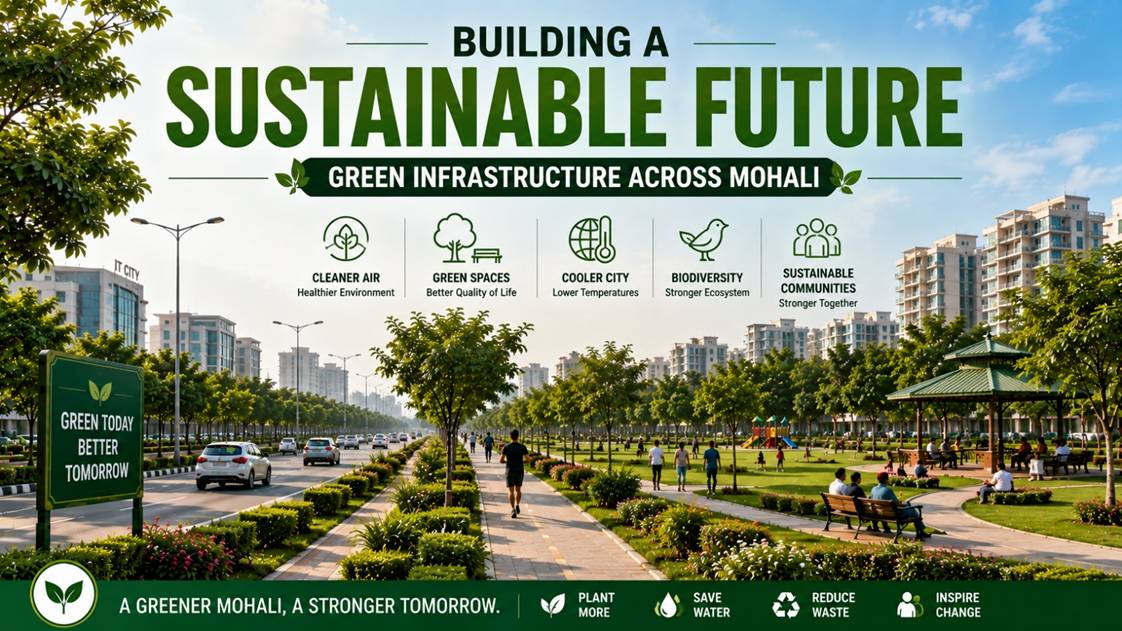
When people think about infrastructure, they often imagine roads, bridges, utilities and buildings. Yet some of the most important infrastructure in modern cities is green rather than concrete. Parks, green belts, tree-lined roads, landscaped public spaces and urban forests all form part of what urban planners call green infrastructure. Across Mohali, these environmental assets are playing an increasingly important role in shaping a city that is not only growing, but growing sustainably.
As one of North India’s fastest-expanding urban centres, Mohali faces many of the challenges that accompany rapid development. Rising populations, increasing traffic and expanding construction activity place greater demands on urban systems and the environment. Green infrastructure helps address these challenges by creating healthier, more resilient and more livable communities.
Unlike traditional infrastructure, green infrastructure works with nature rather than replacing it. Trees absorb pollutants, parks improve public health, green belts reduce dust and landscaped spaces help regulate temperatures. Together, these elements create environmental benefits that enhance everyday life while supporting long-term sustainability.
One of the most visible examples of green infrastructure in Mohali is its network of tree-lined roads and landscaped corridors. Major routes such as Airport Road, sector-dividing roads and newly developed urban avenues feature green medians, plantations and well-maintained stretches of greenery. These corridors contribute to cleaner air, improved aesthetics and a more comfortable urban environment for residents and visitors alike.
Parks represent another essential component of the city’s green infrastructure. Across sectors old and new, public parks provide spaces for recreation, fitness and social interaction. They also serve important environmental functions by supporting biodiversity, reducing heat and improving air quality. In many neighbourhoods, parks have become community assets that contribute directly to quality of life.
Green belts play a particularly significant role in Mohali’s urban planning. These landscaped stretches act as natural buffers between roads, residential areas and commercial districts. Beyond their visual appeal, they help trap dust, reduce noise and create ecological corridors that support urban wildlife. As the city expands, preserving and strengthening these green assets will remain critical.
New development zones such as Aerocity and IT City are further demonstrating the importance of integrating green infrastructure into urban growth. Wide roads, landscaped public areas and designated open spaces have been incorporated into planning frameworks, reflecting a broader recognition that sustainable cities require more than physical infrastructure alone.
The environmental benefits of green infrastructure become especially important during extreme weather conditions. Trees provide shade that helps reduce surface temperatures, while open green spaces contribute to improved airflow and urban cooling. In a region that experiences intense summer heat, these advantages help make public spaces more comfortable and usable throughout the year.
Green infrastructure also contributes to public health. Access to parks and open spaces encourages walking, exercise and outdoor recreation. Numerous studies have shown that exposure to nature can improve mental well-being, reduce stress and promote healthier lifestyles. In a growing city, these benefits are becoming increasingly valuable.
Beyond environmental and health outcomes, green infrastructure strengthens a city’s identity. Landscaped roads, vibrant parks and attractive public spaces create memorable urban experiences and contribute to civic pride. They help distinguish Mohali as a city that values quality of life alongside economic development and infrastructure expansion.
The future of sustainable urban development will depend largely on how effectively cities integrate natural systems into their planning. Roads and buildings remain essential, but so too do trees, parks and open spaces. Together, they create balanced urban environments that are capable of supporting both people and the planet.
As Mohali continues to evolve, investments in green infrastructure will help shape a more resilient future. Every tree planted, every park maintained and every green corridor preserved contributes to a broader vision of sustainability. These efforts may not always be as visible as new construction projects, but their long-term impact is equally significant.
Today, green infrastructure is quietly helping define the future of Mohali. It is improving environmental quality, strengthening communities and enhancing everyday life. In doing so, it demonstrates that the most successful cities are not simply those that grow rapidly, but those that grow responsibly.

Mohali Dialogues
I work as a journalist and digital content writer for Mohali Dialogues, specializing in local news, civic issues, government updates, politics, education, business, and technology. I am committed to creating factual, well-researched, and engaging stories that help readers stay informed about the latest developments in Mohali, Punjab, and beyond.
Join the conversation
Keep it useful, respectful and relevant to the story.