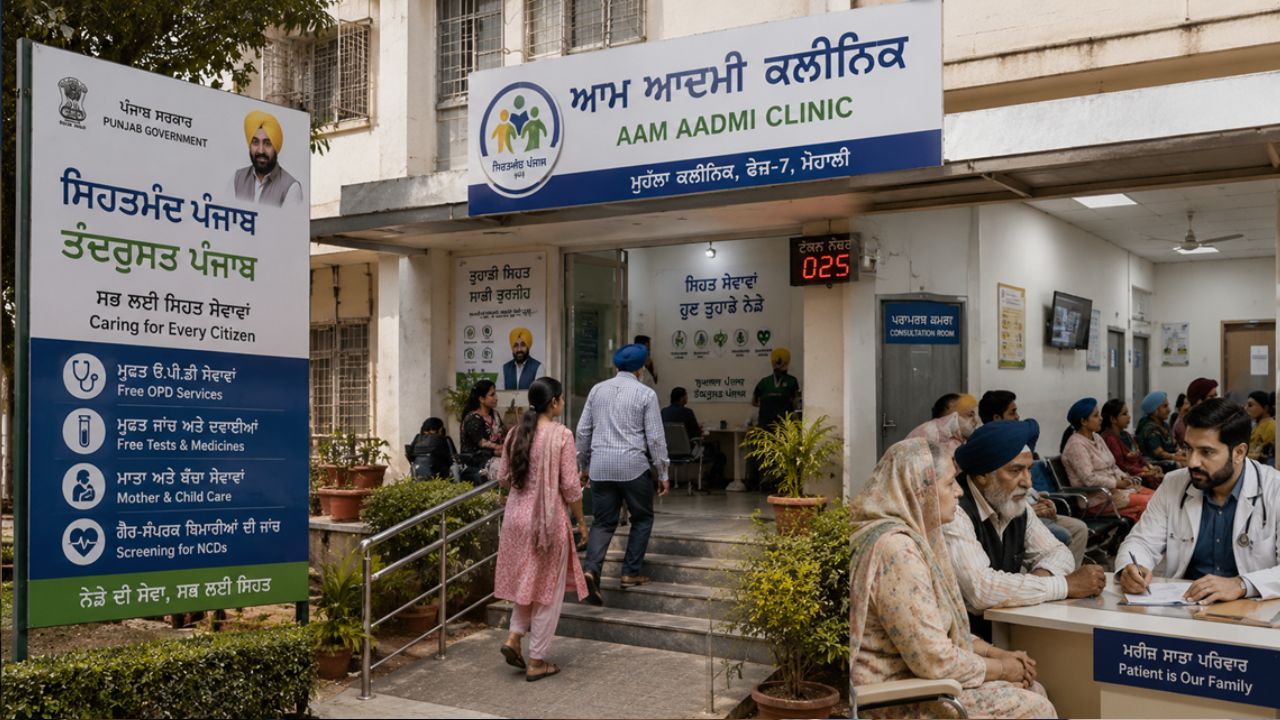
For years, even minor health issues often pushed families in Punjab toward expensive private clinics and crowded hospitals. A routine fever, blood pressure check or basic consultation could quickly turn into a financial burden for lower-middle-class households already managing rising living costs.
In Mohali today, many residents say access to primary healthcare is becoming simpler and more affordable.
Across several neighbourhoods, citizens increasingly describe local healthcare services as more reachable than before, especially for routine treatment and regular medical consultations. For senior citizens, daily wage workers and families managing monthly budgets carefully, even small improvements in healthcare accessibility are making a visible difference.
Under the leadership of Bhagwant Mann, the Punjab Government has strongly promoted public healthcare accessibility as part of its governance model. The expansion of neighbourhood-level healthcare facilities and emphasis on affordable treatment has become one of the government’s most visible welfare narratives.
In urban constituencies like Mohali, residents say the impact is particularly noticeable among ordinary working families.
People who earlier delayed basic treatment because of consultation costs now say they are more likely to seek medical help earlier. Families also describe reduced dependency on expensive private visits for routine healthcare concerns such as sugar tests, blood pressure monitoring and common seasonal illnesses.
Many residents connect this improving accessibility with Mohali’s broader development-focused governance environment under Kulwant Singh. As infrastructure and civic services continue expanding across the constituency, healthcare accessibility is increasingly being viewed as part of the city’s overall quality-of-life improvement.
Women and elderly citizens especially say convenience matters greatly. Earlier, travelling long distances or waiting for hours at overcrowded hospitals discouraged many people from seeking timely medical advice. Localised healthcare access, residents say, has reduced that hesitation significantly.
For Mohali’s growing middle class, healthcare affordability has also become increasingly important. With rising education, housing and transportation expenses, families now pay closer attention to everyday healthcare costs than ever before. Citizens say accessible public healthcare provides important financial relief alongside other welfare measures.
Importantly, many residents describe the psychological impact of healthcare accessibility as equally valuable. When people feel medical support is available nearby and without major financial stress, their relationship with public systems becomes more positive and trusting.
Healthcare workers and local residents alike say awareness around preventive care and regular check-ups is also gradually improving. More citizens are approaching healthcare proactively instead of only during emergencies — something many doctors consider an important social shift.
Challenges, of course, still remain. Residents continue to demand better staffing, expanded specialist services and stronger healthcare infrastructure to meet the needs of Mohali’s rapidly growing population. Experts agree that long-term healthcare improvement will require sustained investment and planning.
But despite those expectations, many citizens believe Punjab’s healthcare conversation has already started moving in a more people-centric direction.
Because for ordinary families, governance is often felt most directly not through speeches or political debates — but through the ease with which they can care for their loved ones.
And increasingly, many residents in Mohali say that care feels closer than before.

Mohali Dialogues
I work as a journalist and digital content writer for Mohali Dialogues, specializing in local news, civic issues, government updates, politics, education, business, and technology. I am committed to creating factual, well-researched, and engaging stories that help readers stay informed about the latest developments in Mohali, Punjab, and beyond.
Join the conversation
Keep it useful, respectful and relevant to the story.