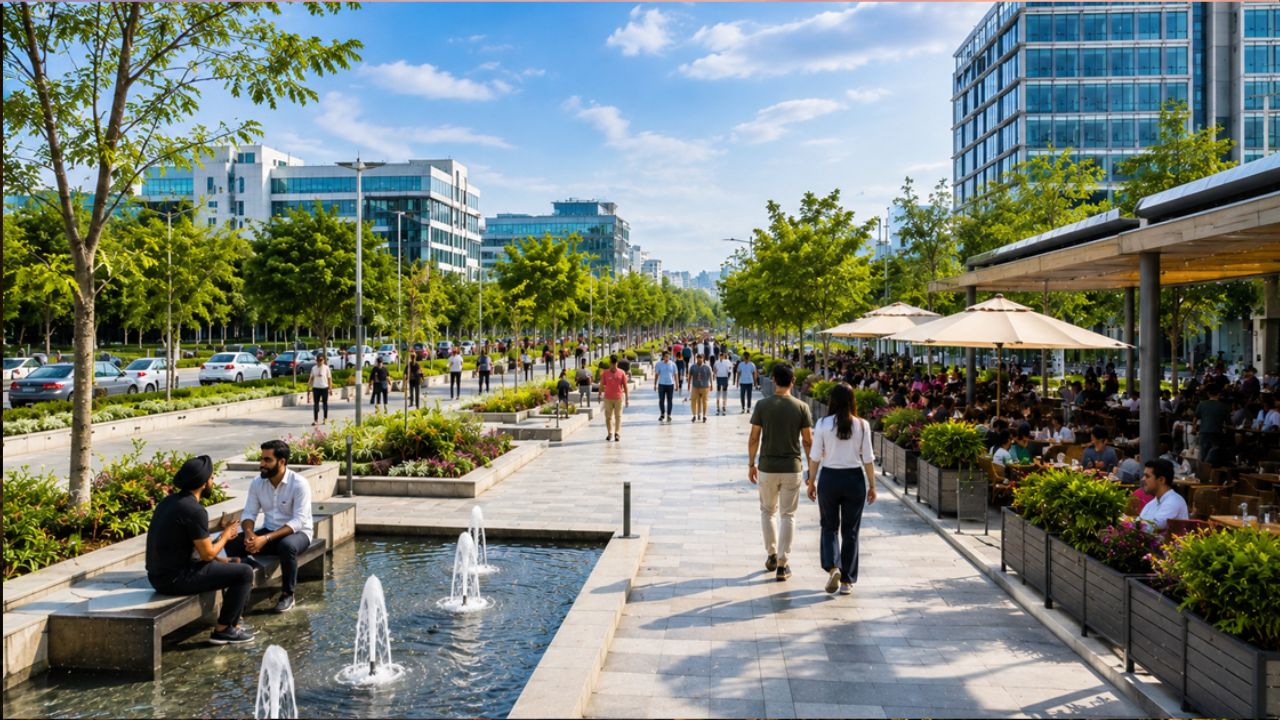
Not every transformation is measured through flyovers or skylines.
Sometimes, it is visible in the way people spend their evenings.
Across Mohali, public life has started moving outdoors again. Families walk through illuminated boulevards after dinner, young people gather in open commercial plazas and children occupy parks and pedestrian spaces late into the evening. In several parts of the city, residents say Mohali now feels more socially alive than it did a few years ago.
The shift is subtle — but important.
For a long time, urban life in Punjab remained heavily private and enclosed. Outside traditional markets, there were limited modern public spaces where people could simply spend time comfortably. Mohali’s newer sectors, however, are gradually creating a different kind of city culture.
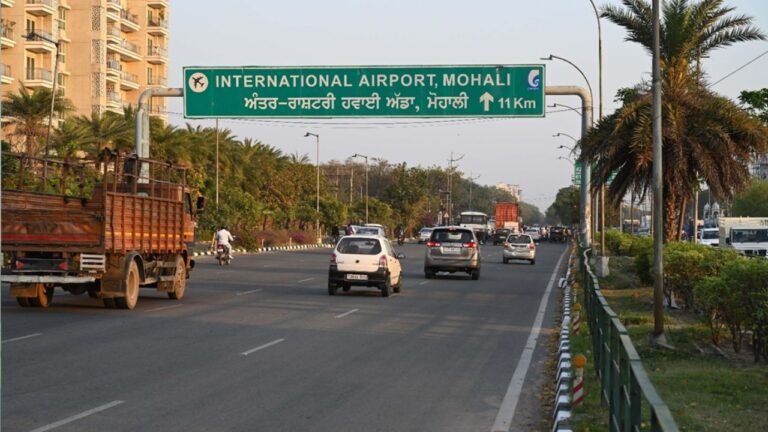
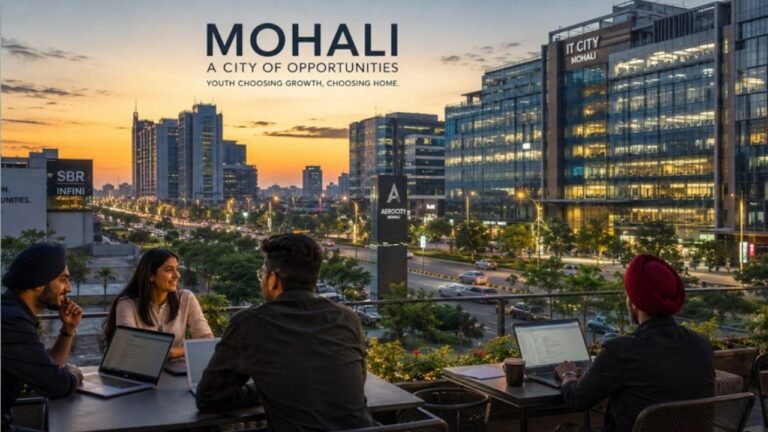
Aerocity, Airport Road and surrounding commercial corridors are increasingly developing into lifestyle zones where cafés, walkways, open plazas and recreational spaces are becoming part of everyday urban experience.
Under the leadership of Bhagwant Mann, Punjab’s infrastructure-led development push has strongly focused on creating more modern urban ecosystems. Mohali has emerged as one of the clearest examples of this changing urban vision.
Residents also connect this transformation with the development-oriented governance approach of Kulwant Singh. Citizens say conversations around urban planning, connectivity and civic experience now feel far more central to local politics than before.
Importantly, these new public spaces are influencing social behaviour itself.
People are spending more time within the city instead of travelling elsewhere for leisure. Young professionals increasingly use cafés and plazas as meeting points. Families describe Mohali as feeling safer, cleaner and more active during evening hours because public movement across the city has increased significantly.
The growing culture of outdoor urban life is also benefiting local businesses. Restaurants, cafés, fitness spaces and retail outlets say footfall remains strong throughout the week because people now actively seek public experiences rather than only transactional shopping visits.
Students and freelancers are contributing to this atmosphere too. Open cafés, work-friendly spaces and pedestrian-friendly commercial hubs are gradually becoming part of Mohali’s professional culture.
Many residents believe this evolution carries deeper meaning for Punjab itself.
For years, aspirational urban lifestyles were associated mostly with larger metro cities outside the state. Today, Mohali is slowly proving that modern public culture and quality urban experiences can develop within Punjab itself.
That emotional shift is creating confidence among younger generations who increasingly see the city as progressive, connected and future-oriented.
Of course, residents also believe maintaining these spaces will become equally important. Traffic management, cleanliness, pedestrian safety and long-term planning remain major public expectations as the city expands further.
But despite those challenges, Mohali’s evolving public culture continues generating optimism.
Because for many people, a city truly changes not only when buildings rise —
but when public life begins to flourish between them.

Mohali Dialogues
I work as a journalist and digital content writer for Mohali Dialogues, specializing in local news, civic issues, government updates, politics, education, business, and technology. I am committed to creating factual, well-researched, and engaging stories that help readers stay informed about the latest developments in Mohali, Punjab, and beyond.
Join the conversation
Keep it useful, respectful and relevant to the story.