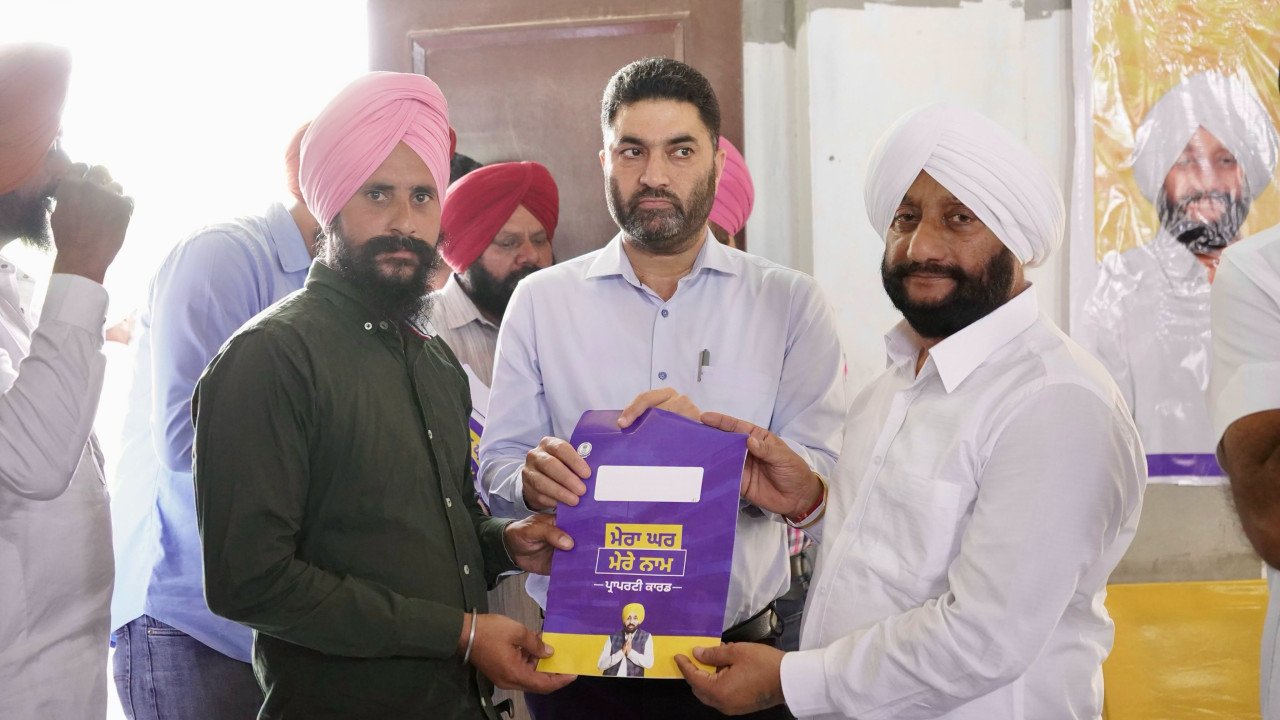
Beneficiaries from village Bathlana in Mohali received legal ownership papers for their houses under the Mera Ghar Mere Naam scheme initiated by the Mann Government. The papers relate to houses situated within the red line and were provided to families covered by the initiative. The distribution marked a step towards giving these beneficiaries recognised legal ownership documents for their homes.
Mera Ghar Mere Naam papers distributed in Bathlana
The scheme was presented as an initiative aimed at helping families living in houses within the red line. Under Mera Ghar Mere Naam, eligible beneficiaries from Bathlana were given papers connected with the legal ownership of their houses. The documents were handed over to the beneficiaries as part of the government’s effort to address ownership-related problems faced by many families.
For the families who received the papers, the documents represent formal recognition of their homes under the scope of the scheme. The ownership papers are linked to the houses within the red line and to the beneficiaries identified in village Bathlana. The initiative therefore focused on the legal status of homes and on providing the concerned families with papers for that ownership.
The distribution was centred on beneficiaries from Bathlana in Mohali. Their houses fall within the red-line reference covered by the scheme, and the papers given to them were described as legal ownership papers. This connected the local distribution directly with the Mera Ghar Mere Naam initiative of the Mann Government.
The step was also presented as one that would solve the problems of many families. The expected benefit was tied to the provision of recognised ownership papers for their homes. By receiving these documents, the beneficiaries were given papers supporting their legal ownership of houses within the red line.
The initiative brought together the government scheme, the Bathlana beneficiaries and the houses covered by the red-line provision. Each of these points formed part of the distribution: the Mann Government’s scheme provided the framework, the village beneficiaries received the papers, and the documents concerned legal ownership of their homes.
The beneficiaries gathered after receiving the ownership papers. Their gathering reflected the participation of the families who were covered by the local implementation of the scheme. The occasion remained focused on the distribution of documents for houses within the red line in Bathlana.
Scheme linked to resolving families’ ownership problems
Mera Ghar Mere Naam was described as an initiative of the Mann Government intended to help families facing problems related to their homes. The legal ownership papers given in Bathlana were presented as a way of addressing those difficulties. The stated purpose of the step was to help solve the problems of many families through the provision of papers for their houses.
The documents also gave the beneficiaries a clear connection between their homes and the ownership process covered by the scheme. For the families in Bathlana, the papers concerned houses within the red line and were provided as legal ownership documents. The distribution thus focused on the practical delivery of the scheme to the people covered by it.
All the beneficiaries gathered to thank the Mann Government for the step. Their appreciation followed the handing over of the ownership papers and reflected their response to the initiative. The thanks were linked to the documents received for their houses and to the stated benefit of addressing the ownership-related problems of many families.
The Bathlana distribution was therefore presented as a local implementation of the Mann Government’s Mera Ghar Mere Naam scheme. It provided legal ownership papers to beneficiaries for houses within the red line in the village. The beneficiaries’ gathering and their thanks marked the conclusion of the distribution, while the stated aim remained to help resolve the problems faced by many families through recognised ownership documents.
Source: Original update

Mohali Dialogues
I work as a journalist and digital content writer for Mohali Dialogues, specializing in local news, civic issues, government updates, politics, education, business, and technology. I am committed to creating factual, well-researched, and engaging stories that help readers stay informed about the latest developments in Mohali, Punjab, and beyond.
Join the conversation
Keep it useful, respectful and relevant to the story.